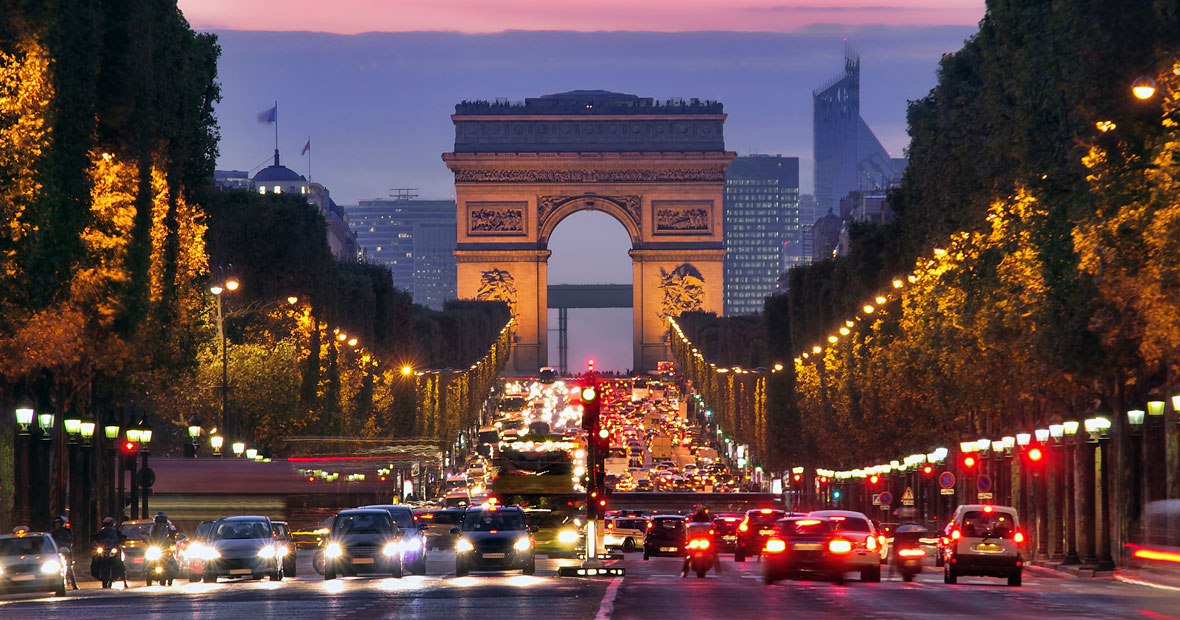
Paris during Christmas transcends ordinary sightseeing. The city transforms into a living canvas of light, sound, and emotion that demands more than casual observation. While street-level exploration offers intimacy, it cannot replicate the sweeping sensory immersion that comes from witnessing the City of Light from an elevated, open-air vantage point.
The difference between walking through illuminated streets and gliding above them on a Paris Christmas bus tour mirrors the contrast between reading about a symphony and experiencing it live. From street level, you encounter fragmented glimpses—a decorated storefront here, a lit tree there. From the open upper deck of a touring bus, these fragments coalesce into orchestrated patterns invisible to pedestrians below.
This article explores the hidden dimensions that transform a simple bus tour into an optimized experience. From understanding why elevation amplifies sensory perception to orchestrating perfect timing around light dynamics, from configuring the journey for different companions to preserving memories beyond standard photography—the strategic advantages of open-top touring reveal themselves only when you know where to look.
Paris Christmas Bus Tour Essentials
- Open-air elevation creates unique multisensory immersion combining sight, sound, and temperature contrast
- Optimal viewing window occurs 45 minutes before full darkness when natural and artificial light merge
- Strategic seating and preparation vary dramatically by companion type—families, couples, seniors need different configurations
- Pre-tour warmth immersion and post-tour anchoring activities amplify the central experience exponentially
- Memory preservation extends beyond photography through sensory journaling and mindful presence practices
Why Open-Air Elevation Transforms Paris’s Christmas Atmosphere
The physics of perception change fundamentally with altitude. From street level, Christmas illuminations appear as isolated points of light against dark buildings. From an elevated open-air platform, these same lights reveal themselves as deliberate constellations—geometric patterns stretching across boulevards, synchronized displays wrapping entire districts, the intentional choreography of over 20,000 LED light bulbs illuminating the Champs-Élysées visible only from above.
This unobstructed 360-degree perspective functions like switching from a microscope to a telescope. Pedestrians see individual decorated storefronts. Bus passengers witness how those storefronts form synchronized light corridors extending for kilometers. The Haussmann boulevards, designed for visual grandeur, reveal their true architectural intention only when viewed from elevation—their radial geometry transforms into star patterns of light impossible to perceive when you’re embedded within them.
Temperature plays a counterintuitive role in enhancing this experience. Cold December air heightens every sensory input. The contrast between frigid wind and the visual warmth of golden illuminations creates a perceptual sharpness absent in climate-controlled environments. Your body registers the cold while your eyes absorb warmth, producing a sensory paradox that intensifies emotional response.
The acoustic dimension amplifies this effect. From street level, sound fragments into noise—traffic, conversations, scattered music. From an open upper deck, these elements blend into a layered soundscape. Christmas carols from street-level markets rise upward, mixing with the ambient hum of the city, creating an audio atmosphere unique to elevated open-air observation. The kinesthetic element of movement adds temporal rhythm, transforming static observation into narrative flow.
Research on altitude effects reveals fascinating insights into sensory processing. Studies examining sensory perception under environmental changes demonstrate that altered atmospheric conditions modify how our brains process audiovisual information. While the research focused on different variables, the principle holds: environmental context fundamentally shapes perception. The open-top bus creates a unique sensory microclimate where cold air, unobstructed sightlines, and elevated acoustics combine to heighten awareness.
This phenomenon explains why passengers consistently report the experience as more immersive than expected. A one-of-a-kind cultural and sensory experience blending history and innovation emerges not from novelty alone, but from the physiological reality that elevation without barriers removes the filtering mechanisms that normally dampen sensory input. You’re simultaneously protected by movement and exposed to elements—a combination that triggers heightened present-moment awareness.
Orchestrating Your Tour Timing Around Light and Weather Dynamics
The quality of Christmas illuminations varies dramatically across temporal windows most visitors never consider. Paris’s light displays operate from November 27, 2025 to February 2, 2026, but within this span, precise timing determines whether you witness adequate brightness or optimal magic.
The golden viewing window exists in the liminal space between sunset and full darkness—approximately 45 minutes when residual natural light in the western sky creates gradient backdrops for illuminations. During early December, this window opens around 4:30 PM. By late December, it shifts to 4:45 PM. This transition matters more than most realize because the interplay between fading daylight and activated lights produces color saturation impossible to achieve in complete darkness.
| Time Period | Light Status | Crowd Level | Visual Effect |
|---|---|---|---|
| 4:00-5:00 PM | Lights turning on | Moderate | Twilight mixing with illuminations |
| 5:00-6:00 PM | Fully lit | High (pre-dinner rush) | Full brightness contrast |
| 8:00-10:00 PM | Fully lit | Lower | Maximum darkness contrast |
| Dec 24 & 31 | All night illumination | Very high | Special extended viewing |
Weather conditions typically considered obstacles actually enhance certain visual effects. Light mist or fine snowfall—common in December Paris—creates halo effects around illuminations. Water particles in the air diffract light, producing corona phenomena that amplify the perceived glow of decorations. What appears as unfortunate weather to the unprepared becomes atmospheric enhancement for the informed observer.
Strategic timing extends beyond light quality to crowd dynamics. The 5:00-6:00 PM window suffers from pre-dinner congestion as both tourists and Parisians transit through illuminated zones. Tours departing at 4:00 PM capture optimal twilight while avoiding peak crowds. Late evening departures after 8:00 PM offer maximum darkness contrast but sacrifice the gradient light transition that creates visual depth.
Strategic December Timing Guide
- Check sunset times daily – shifts from 4:50 PM in early December to 5:05 PM by late December
- Arrive 30 minutes before official lighting time for golden hour photography
- Monitor weather forecasts – light mist enhances glow effects without obscuring views
- Book evening tours for weekdays to avoid weekend crowds
- December 24 & 31 feature all-night illuminations for extended viewing opportunities
The December progression itself creates strategic considerations. Early December offers longer twilight windows and lighter crowds but fewer decorations reach full activation. Late December presents complete decoration displays but compressed twilight periods and maximum tourist density. Mid-December, particularly December 10-20, offers the sweet spot—full decorative activation, moderate crowds, and still-reasonable twilight duration.
Understanding these temporal dynamics transforms a generic « evening bus tour » into a precisely calibrated experience. Those familiar with Paris sightseeing buses recognize that timing distinguishes memorable experiences from merely adequate ones. The same principle applies exponentially during Christmas when light quality fluctuates hourly.
Configuring the Experience for Different Travel Companions
The optimal bus tour configuration varies radically depending on who accompanies you. What works perfectly for romantic couples creates challenges for families with young children. What satisfies solo photographers frustrates multi-generational groups. Recognizing these distinctions allows proactive adaptation rather than reactive problem-solving.
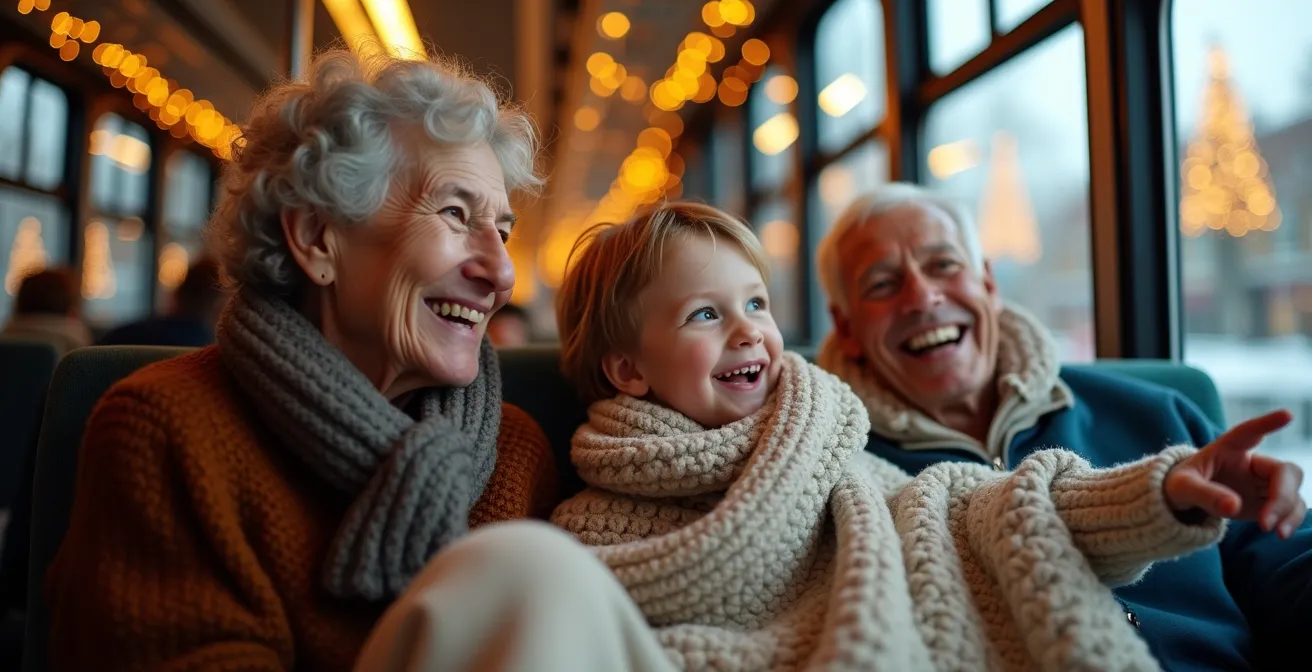
Families with young children face unique challenges on open-top winter tours. Small bodies lose heat faster than adults, making thermal preparation critical. Layering with wind-resistant outer shells, bringing extra blankets, and selecting center upper deck seats away from edge exposure prevents discomfort that transforms wonder into ordeal. Strategic seating matters—positions near the front provide engagement with forward motion and reduce the temptation to stand or lean dangerously.
Distraction management during transit segments between illuminated zones becomes essential for maintaining young attention spans. Pre-loading tablets with Paris-themed content, bringing small snacks (where permitted), and narrating upcoming highlights sustains engagement. The demographic reality supports this focus—current travel data shows families represent a significant portion of seasonal tourism, making family-optimized configurations commercially and experientially important.
| Travel Group Type | Percentage of Travelers | Key Needs | Recommended Adaptations |
|---|---|---|---|
| Parents with children | 85% likely to travel | Entertainment, safety | Upper deck center seats, thermal preparation |
| Multi-generational | 50% plan this type | Accessibility, comfort | Lower deck option, audio clarity |
| Young families (18-35) | 44% bring children | Connectivity, flexibility | WiFi-enabled buses, shorter tour options |
Romantic couples seek entirely different optimization. Front upper deck corner seats provide relative privacy despite the public setting while maximizing unobstructed views for shared observation. Pre-tour dining coordination matters—eating before departure prevents hunger distraction while avoiding the sluggishness of over-eating. Many couples underestimate how cold affects romance; shared thermal blankets transform potential discomfort into cozy intimacy.
Multi-generational groups require the most complex configuration balancing. Seniors often have mobility constraints that make upper deck access challenging, yet they typically want photo opportunities equal to younger members. The solution involves strategic positioning—some members on lower deck with good window access, others on upper deck equipped to capture photos for the entire group. Audio clarity becomes critical; many standard bus audio systems struggle for those with hearing challenges. Modern coach buses address this concern systematically, with features like climate control and accessible amenities becoming standard.
Solo travelers optimize differently, prioritizing photographic freedom and unobstructed sightlines over social comfort. Aisle seats on the upper deck allow easy movement to either side for optimal shooting angles. The absence of companion obligations permits full immersion in present-moment experience without conversational interruption. Solo configuration also enables spontaneous social interaction with other passengers when desired, transforming potential isolation into serendipitous connection.
| Companion Type | Optimal Seating | Essential Preparations |
|---|---|---|
| Young children (4-8) | Center upper deck, away from edges | Extra layers, snacks, entertainment devices |
| Seniors/mobility concerns | Lower deck near entrance | Blankets, easy access to facilities |
| Romantic couples | Front upper deck corners | Shared blanket, camera ready positions |
| Solo travelers | Aisle seats upper deck | Freedom to move for photos |
These configurations share one commonality: preparation prevents problems. Recognizing your group’s specific needs before boarding allows proactive solutions rather than reactive adjustments. The bus tour becomes genuinely enjoyable only when physical comfort and logistical concerns fade into background, allowing the experience itself to occupy full attention.
Layering Your Bus Experience With Strategic Pre and Post Activities
Treating the bus tour as an isolated activity squanders opportunities for experiential amplification. The most memorable experiences emerge from deliberate sequencing—creating sensory contrasts before the tour and anchoring memories immediately after. The tour becomes the emotional climax of a carefully orchestrated evening rather than a standalone event.
Pre-tour warmth immersion establishes crucial contrast. Spending 45 minutes in a cozy café or museum before boarding creates thermal and sensory baseline against which the open-air experience registers more powerfully. The transition from enclosed warmth to open cold, from intimate space to expansive cityscape, from stillness to motion—each contrast heightens awareness of the tour’s unique qualities.
Pre-Tour Warmth Preparation Strategy
- Visit a cozy café 45 minutes before departure for thermal contrast preparation
- Purchase hot chocolate or mulled wine to-go from nearby Christmas market
- Explore indoor Galeries Lafayette Christmas displays to build anticipation
- Use heated waiting areas at major departure points like Opera
The transition ritual between warmth and tour creates psychological preparation. Selecting the perfect warm beverage to consume just before boarding—whether permitted aboard or finished at the departure point—establishes a sensory marker. The taste and warmth become associated with the beginning of the experience, creating a Pavlovian anchor for later memory retrieval.
Post-tour memory anchoring proves equally critical. The brain’s memory consolidation processes work most effectively in the immediate aftermath of significant experiences. Visiting a warm restaurant or exploring a nearby Christmas market within the first hour after the tour allows discussion of highlights while sensations remain vivid. This verbal processing converts experiential memory into narrative memory, making it more durable and retrievable long-term.
Creating photographic continuity extends the experiential arc beyond the tour itself. Planning shots before (anticipation), during (immersion), and after (reflection) the tour produces a visual story more compelling than isolated tour photos. The before shots capture preparation and excitement, tour shots document the peak experience, and after shots preserve the warm afterglow during post-tour activities. This trilogy structure mirrors classic narrative arc, giving your photo collection inherent storytelling power.
The architectural approach to experience design reveals itself here. Just as architects create spatial sequences that build anticipation, deliver climax, and provide resolution, optimal tour experiences follow similar patterns. The pre-tour warmth builds anticipation through contrast. The tour delivers climactic sensory immersion. Post-tour anchoring provides resolution and integration. For those interested in broader cultural context, understanding how to explore Paris culture enriches this sequential approach significantly.
This layered architecture transforms a 90-minute tour into a 3-4 hour experience arc that registers more powerfully in memory. The tour itself may last only an hour and a half, but the complete sequence creates a memorable evening that persists in recollection far beyond isolated tour memories.
Capturing and Preserving the Ephemeral Magic Beyond Photography
Photography dominates how we attempt to preserve travel experiences, yet it captures only the visual dimension of inherently multisensory events. The magic of a Christmas bus tour through Paris exists as much in sound, temperature, movement, and emotion as in visual spectacle. Preservation strategies that address only sight leave the majority of the experience undocumented and vulnerable to memory decay.
Sensory journaling techniques offer a powerful alternative. Recording 30-second voice memos describing immediate sensations—the specific quality of cold air, the particular blend of sounds at a given moment, the precise emotional state—creates multisensory memory anchors impossible with photography alone. These brief verbal snapshots require minimal time investment but generate disproportionate memory preservation returns.
Multi-Sensory Memory Capture Techniques
- Record 30-second voice memos describing current sensations – cold air, light patterns, sounds
- Note specific scents encountered – roasted chestnuts, winter air, mulled wine from markets
- Create texture memories – touch bus rail, feel cold metal, warm blanket contrast
- Designate 5-minute ‘no-photo zones’ for pure absorption at key viewpoints
- Use audio recording app to capture Christmas carols mixed with city sounds
Strategic audio capture complements rather than replaces photography. Recording 30-second ambient sound snippets at key moments—the acoustic blend when passing Notre-Dame, the specific mix of carols and conversation at a particularly magical viewpoint—creates audio triggers that reactivate fuller memory complexes when replayed later. Neuroscience research demonstrates that sensory cues trigger more complete memory recall than visual information alone.
The relationship between photography and memory proves more complex than commonly assumed. Research examining how photographic practice influences autobiographical memory reveals that the act of photographing can sometimes interfere with direct experience encoding. Studies show that excessive photo-taking occasionally reduces memory formation for the photographed event—a phenomenon called the « photo-taking impairment effect. »
Mindful presence practices counteract this effect. Designating specific 5-minute windows as « no-photo zones » during the tour’s most spectacular moments forces pure sensory absorption without the mediating filter of camera operation. These deliberate pauses from documentation paradoxically create stronger memories than segments exhaustively photographed. The brain encodes direct sensory experience differently than mediated experience, and both types serve different memory functions.
Memory Consolidation Through Sensory Association
Neuroscience research into memory formation reveals critical insights about experience preservation. Studies examining how the brain prioritizes certain memories over others demonstrate that survival-relevant information—such as locations associated with significant rewards or emotionally salient experiences—receives preferential consolidation. The mechanisms driving selective memory preservation remain active areas of investigation, but practical applications emerge clearly: creating multisensory associations during significant moments enhances later retrieval. The open-top Christmas bus tour naturally generates these conditions through its combination of visual spectacle, thermal contrast, and emotional resonance, making it neurologically primed for strong memory formation when complemented by intentional capture techniques.
Post-tour memory consolidation activities amplify this natural advantage. Creating a multisensory album within 24-48 hours after the tour—combining selected photos, audio snippets, written impressions, and physical mementos like tickets or maps—forces active memory reconstruction while details remain fresh. This active reconstruction strengthens neural pathways more effectively than passive review of photos alone.
The goal isn’t comprehensive documentation but strategic preservation of sensory keys that unlock fuller memories. A single 30-second audio recording of the acoustic atmosphere at Pont Alexandre can trigger recall of the entire surrounding experience—the visual scene, the temperature, the emotional state, even conversational fragments—when replayed months later. These sensory keys function like bookmarks in experiential memory, allowing access to chapters that would otherwise fade.
This approach acknowledges a fundamental truth: ephemeral experiences cannot be fully preserved, only evoked. The Christmas bus tour exists as a time-bound event that disappears the moment it ends. But strategic sensory capture creates a constellation of triggers that, when activated later, reconstruct an experiential approximation. This reconstructed memory, though imperfect, retains the essential magic in ways that photo albums alone cannot achieve.
Key Takeaways
- Open-air elevation fundamentally transforms sensory perception through unobstructed 360-degree views and acoustic dimension layering
- Optimal timing requires 45-minute twilight windows when natural and artificial light merge for gradient effects
- Companion-specific configurations dramatically impact comfort and enjoyment across family, couple, senior, and solo traveler profiles
- Strategic pre-tour warmth immersion and post-tour anchoring activities multiply the central experience’s emotional impact
- Multisensory memory preservation through audio capture and mindful presence creates more durable recollections than photography alone
Final Thoughts on Orchestrating Your Christmas Magic
The transformation from tourist to experiencer hinges on recognizing that Paris Christmas bus tours offer far more than transportation past illuminated landmarks. They provide a unique sensory microclimate where elevation, exposure, movement, and urban spectacle converge into something greater than their individual components. Understanding the hidden dimensions—how altitude changes perception, how timing affects light quality, how companion needs shape configuration, how sequential experiences amplify impact—converts a simple tour into orchestrated magic.
This knowledge doesn’t diminish spontaneity but enhances it. Strategic preparation creates the conditions under which genuine wonder can emerge. When physical discomfort doesn’t distract, when timing captures optimal visual conditions, when companion needs receive proactive attention, when memory preservation extends beyond snapshot accumulation—the experience itself occupies full attention. The magic that everyone seeks in Paris at Christmas reveals itself most fully to those who understand how to look, when to look, and how to preserve what they find.
The open-top bus doesn’t merely show you Christmas in Paris. It positions you within a carefully designed experiential architecture where every element—height, exposure, motion, sequence—contributes to transformation. From understanding why elevation matters to capturing the ephemeral, each dimension builds toward a singular outcome: memories that persist and moments that endure long after the illuminations darken and the bus returns to its depot.
Frequently Asked Questions About Christmas Paris Bus Tours
What nearby venues offer immediate warmth after the tour?
Most departure points near Opera and Champs-Élysées have restaurants and cafés open until midnight during Christmas season. The Tuileries Christmas Market stays open for post-tour exploration, providing both warmth and extended festive atmosphere to anchor your memories while sensations remain fresh.
Can we bring warm drinks on the open-top bus?
Most operators allow sealed beverages. Purchase hot chocolate from nearby cafés in to-go cups with secure lids before boarding. This creates both thermal comfort and a sensory marker that enhances memory formation during the tour experience.
What’s the best post-tour activity to preserve memories?
Visit a nearby brasserie immediately after for dinner, allowing time to discuss highlights while sensations are fresh. Many stay open late during the holiday season. This verbal processing converts experiential memory into narrative memory, making it more durable and retrievable long-term.
How should I prepare children for the cold on an open-top tour?
Layer with wind-resistant outer shells, bring extra blankets, and select center upper deck seats away from edge exposure. Small bodies lose heat faster than adults, so thermal preparation prevents discomfort that could transform wonder into ordeal. Pack small snacks and pre-load tablets with Paris-themed content for distraction during transit segments between illuminated zones.