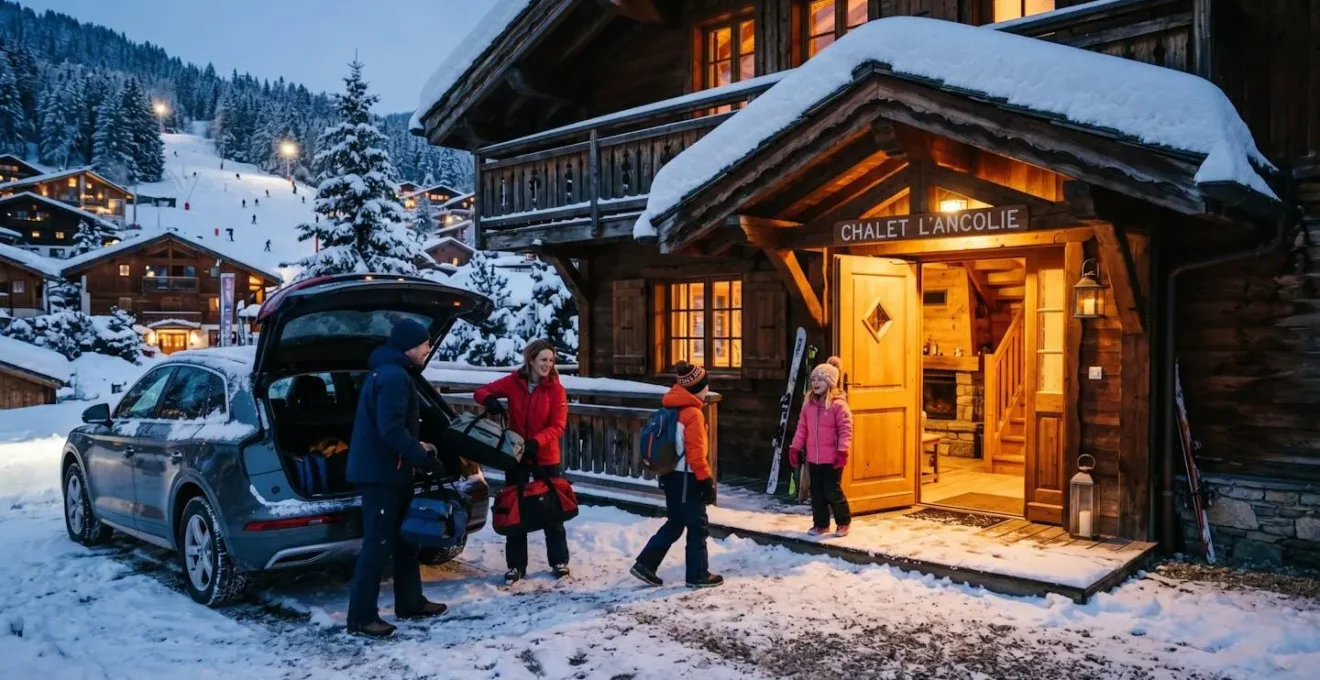
Booking a chalet or apartment in the Alps rather than a standard hotel room changes the entire texture of a ski holiday. More square metres, a fully equipped kitchen, the freedom to set your own schedule — and often a price per head that compares favourably once a group shares the cost. This guide breaks down the practical reasons why mountain rental accommodation keeps outperforming expectations, season after season.
Space and autonomy: what hotels simply cannot match
A hotel room delivers a bed, a bathroom and a breakfast buffet. That formula works for a solo business trip. For a family of five or a group of eight friends arriving after a full day on the pistes, it falls apart almost immediately. Ski boots need drying, wet base layers need hanging, and four people holding a post-ski aperitif in a 22-square-metre room is nobody’s idea of a good holiday.
The rental model solves each of those frictions at once. A typical mountain rental accommodation includes a dedicated boot room or heated storage area, a living space large enough for the whole party to gather, and a kitchen that lets guests control meals — timing, budget and dietary preferences included. The practical difference is significant from the first evening.
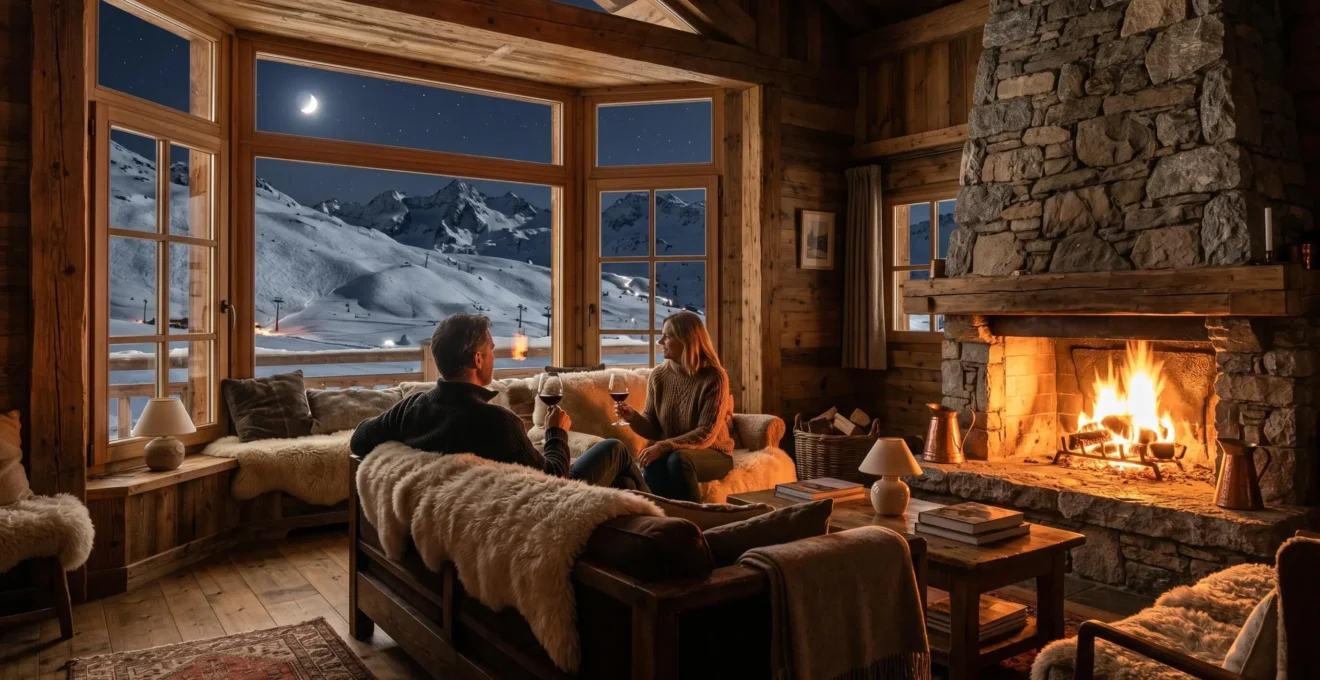
Among the properties listed on this selection of Courchevel holiday rentals, options range from compact studios suited to couples to multi-bedroom chalets featuring fireplaces, terraces and jacuzzis — each with the authentic Savoyard character that purpose-built hotel blocks rarely replicate.
Cas pratique: the group that outgrew its hotel
Imagine two couples of ski enthusiasts who have booked adjacent hotel rooms for three seasons running. Each year, the evenings feel fractured: one couple orders room service, the other heads to a restaurant alone, coordination becomes a source of low-grade friction rather than pleasure. On the fourth trip, they switch to a four-bedroom apartment. The shared living space and kitchen mean dinners are cooked together, après-ski runs long without the pressure of restaurant closing times, and the overall cost per person drops noticeably. The holiday dynamic shifts entirely — not because the mountain changed, but because the accommodation finally matched how the group actually behaves.
Autonomy also extends to scheduling. There is no checkout time hovering over a slow Sunday morning, no breakfast service to fit around, no lobby queue to navigate in full ski kit. The rhythm of the stay becomes entirely self-determined — which, for most travellers, is itself a luxury worth more than a spa credit.
Location advantage and ski-in/ski-out access
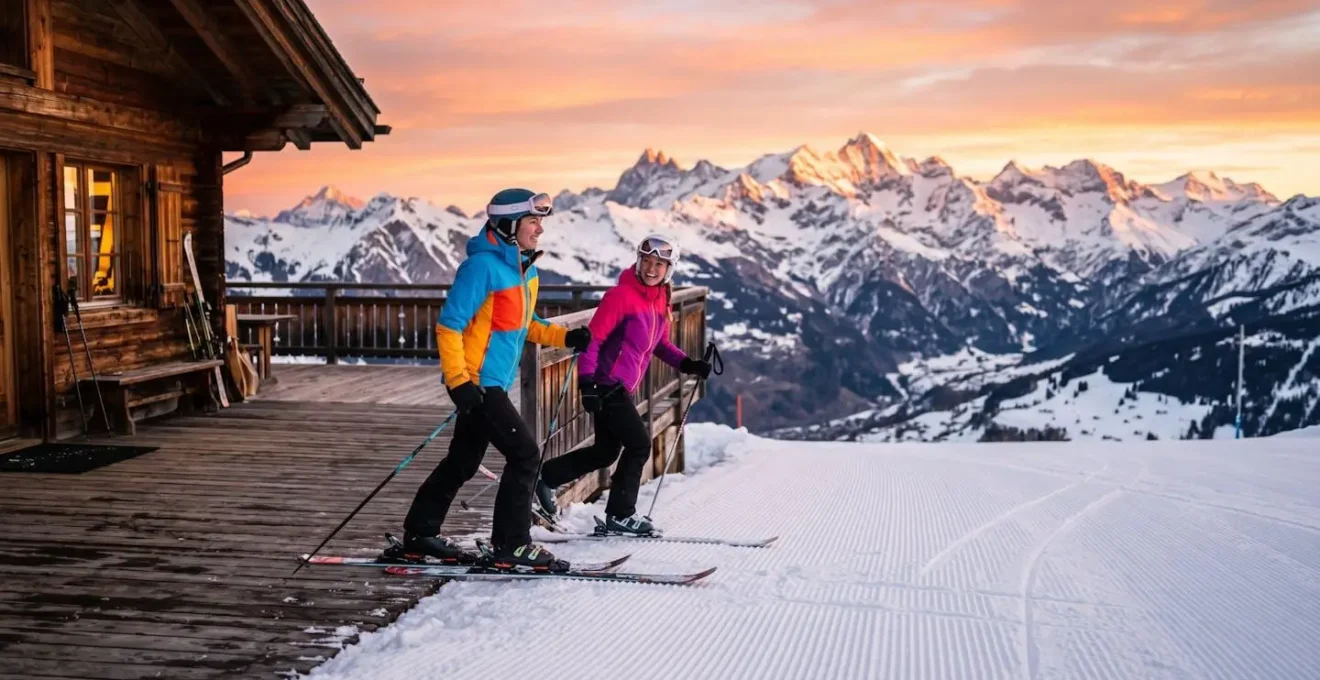
Distance from the slopes is the single most debated variable when planning a ski holiday. Every extra minute of walking in ski boots — on icy pavements, carrying poles — chips away at morning motivation and compresses the usable ski day. The market for ski-in/ski-out properties exists precisely because that friction is real and cumulative across a week.
Courchevel sits within the Trois Vallées ski area, the largest interconnected ski domain in the world. Properties positioned in Courchevel 1850, Moriond, Le Praz or the Village sector each offer distinct trade-offs between altitude, ambiance and piste access — a granularity of choice that hotel inventories rarely provide at the same price tier.
Worth knowing: Proximity to slopes is not the only location criterion. Access to ski schools, lift queues, grocery shops and restaurant strips varies meaningfully between the four Courchevel villages. Weighing these factors before booking — rather than defaulting to the highest altitude — often produces a better match for the group’s actual needs.
A professional concierge service accompanying the rental further reduces logistical load. Transfers from Geneva or Lyon, ski passes arranged in advance, lesson bookings for children — handling these details before arrival rather than on the first morning preserves energy for the mountain. The practice among specialist rental agencies in the Alps confirms that the clé en main approach, where accommodation and services are bundled, consistently reduces the stress points that erode holiday satisfaction.
The location equation also runs in the other direction. Families with young children, or groups that include non-skiers, benefit from rentals set slightly off the main piste arteries: quieter surroundings, safer outdoor spaces, proximity to village life. The diversity of stock in a resort like Courchevel makes this calibration possible in a way that a single hotel property cannot accommodate.
Value for groups: how the numbers stack up
The cost argument for rental accommodation becomes clearest when applied to groups rather than individuals. A hotel rate is set per room, per night — a structure that scales poorly. A chalet or large apartment carries a single weekly price that, divided across six, eight or ten people, frequently undercuts comparable hotel accommodation on a per-person basis, sometimes markedly so.
The kitchen variable amplifies that advantage. Even modest daily savings on breakfasts and two or three dinners prepared at home — rather than restaurant prices in a premium Alpine resort — accumulate into a material budget difference across a seven-night stay. That budget can be redirected toward experiences: guided off-piste sessions, a restaurant splurge on one special evening, or upgraded lift passes.
- Cost per head falls as group size rises
- Kitchen access cuts daily food spend significantly
- Full living space sustains group cohesion throughout the stay
- Property amenities (jacuzzi, terrace, fireplace) at no extra charge
- Daily housekeeping included as standard
- More viable for solo travellers or short two-night stays
The quality range within the rental market is broader than many first-time bookers anticipate. Studios and duplexes serve couples or small pairs on tighter budgets; prestigious chalets with multiple ensuite bedrooms, panoramic terraces and premium finishes serve groups where the experience itself is the purpose of the trip. The spectrum means that rental is not a fallback option but a deliberate category with its own hierarchy of quality.
A practical note on timing: demand for the best-positioned properties in Courchevel — particularly those with direct piste access — is concentrated around the same school holiday windows across France, the UK and Northern Europe. Securing preferred dates well in advance is not merely a booking tip; the market data from specialist Alpine agencies consistently shows that last-minute availability for quality stock in peak weeks is structurally limited.
Planning your stay: what to check before booking
Knowing which questions to ask before committing to a rental separates a smooth arrival from a week of minor frustrations. The checklist below distils the practical variables that most commonly create friction — and that a good letting agency should be able to address clearly before any contract is signed.
- Confirm exact distance to nearest ski lift or piste access point
- Check whether ski storage and boot drying facilities are included
- Ask which concierge services (transfers, passes, lessons) are available and when they must be requested
- Clarify linen, towel and end-of-stay cleaning arrangements
- Verify the deposit terms and cancellation conditions in writing
One scenario worth anticipating: a group of eight that books a chalet advertised as sleeping ten may discover on arrival that two of those sleeping spaces are convertible sofas in an open-plan area rather than private bedrooms. Structural sleeping arrangements, not just headcount capacity, should be confirmed explicitly. Reputable agencies will provide floor plans or detailed property descriptions that remove this ambiguity before payment.
The regulatory framework for short-term tourist rentals in French Alpine resorts is also worth noting. French municipalities require property owners to register seasonal rental properties and apply a taxe de séjour (tourist tax) per person per night. As the Direction de l’information légale et administrative details on its official portal, obligations differ according to whether the property is the owner’s principal residence or a dedicated investment property. For the guest, this translates in practice to a small nightly charge added to the rental invoice — transparent and regulated rather than hidden.
French consumer protection rules provide an additional layer of security. Rental agreements are subject to the general obligations of conformity established under the French consumer code, which means that a property failing to match its advertised description gives the renter grounds for recourse. Keeping a copy of the listing description and photographs at the time of booking — a two-minute step — provides a clear reference point if any discrepancy arises on arrival.
Mountain holidays carry enough variables — weather windows, snow conditions, group dynamics — without adding accommodation uncertainty to the mix. A well-chosen chalet or apartment rental, booked through a specialist, removes that variable entirely and lets the mountain itself take centre stage from the first morning to the last.
The next step before your season
The gap between a holiday that delivers and one that merely happens often comes down to the quality of the base. Space, location, services and price alignment are not abstract criteria — they determine whether a ski week becomes a story worth retelling or a checklist of minor frustrations best forgotten.
- Define your group profile precisely: size, ages, skiing levels and budget range per person
- Identify your preferred Courchevel village based on altitude, atmosphere and piste proximity
- Contact a specialist local agency early — peak-week stock in well-positioned properties moves faster than most travellers expect
- Request full concierge details at the time of booking, not on arrival week
The mountain is already there, ready. The quality of what surrounds it each evening is the part that remains entirely within your control to choose.
Is renting a chalet more expensive than staying in a hotel in Courchevel?
On a per-room or per-night basis, a premium chalet can carry a higher headline price than a hotel room. On a per-person basis for groups of six or more, the equation typically reverses — particularly once the cost of restaurant meals (replaced by home cooking) is factored in. The comparison becomes most favourable for groups booking over a full week.
What does a concierge service actually include in a mountain rental?
Concierge services offered by specialist Alpine agencies typically cover airport or station transfers, ski pass procurement, ski school booking for children or beginners, and in some cases grocery pre-orders. The scope varies by property and agency — the key is to request the full service menu at booking stage rather than on arrival day.
Are rental properties in Courchevel available for summer stays?
Courchevel operates year-round. Summer brings hiking, mountain biking and a markedly quieter atmosphere. Many of the same properties available in winter are offered in summer at different rate structures, making them viable for travellers seeking Alpine scenery without the ski-season crowds.