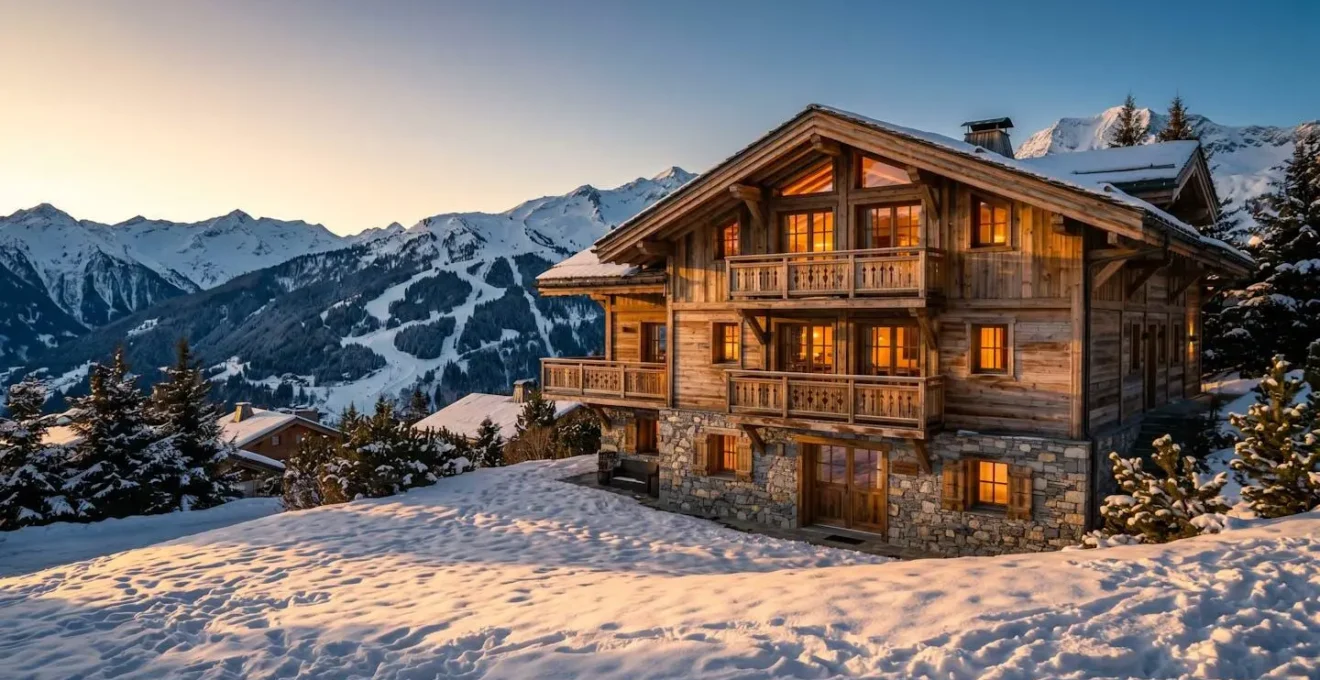
The most commonly overlooked advantage of alpine rental lies not in what you gain, but in what you avoid: the silent financial drain of year-round property costs accumulating during 46 weeks of absence each year.
Understanding this financial asymmetry requires examining not merely accommodation costs, but the complete ownership expense structure that persists regardless of actual property usage.
A typical scenario unfolds each season across Courchevel’s altitude zones: a family books two weeks in a beautifully appointed chalet, skis directly to the slopes, and returns home with no lingering obligations. The property owner in the adjacent building, meanwhile, faces utility bills throughout the empty months, coordinates emergency repairs from abroad, and navigates property management fees that accumulate regardless of occupancy.
Your rental advantage snapshot: what matters most
- Zero maintenance obligations or year-round property costs
- Integrated service packages (transfers, ski passes, equipment) coordinated by agency
- Flexibility to access varied properties and altitudes across multiple seasons
- Transparent all-inclusive pricing versus hidden ownership expenses
- Premium Courchevel locations without multi-million euro capital commitment
Market analysis reveals that a peer-reviewed study indexed by the DOAJ quantifies an estimated 1,850,000 second homes accounting for more than 25% of the total housing stock in the Alps. This concentration reflects a structural ownership model built around leisure rather than residence—precisely the usage pattern where rental economics outperform purchase commitments.
Trading ownership anxieties for pure alpine freedom
Consider the financial reality facing alpine property owners. While ownership provides the psychological comfort of a permanent mountain address, it demands year-round maintenance obligations that persist whether you occupy the property for two weeks or twenty. Property management fees, utility connections maintained during months of vacancy, insurance premiums, local taxes, and the unpredictable cost of repairs create a baseline expense that operates independently of actual usage.
The arithmetic becomes stark when examining typical occupancy patterns. Experienced alpine property specialists observe that many Courchevel owners use their investments fewer than six weeks annually, yet shoulder twelve months of operating costs. Rental data consistently shows that for travelers prioritizing two to four weeks of annual mountain access, the cumulative expense of ownership—including the opportunity cost of capital typically locked in assets estimated between €450,000 and €5,250,000 depending on location and property category—vastly exceeds the transparent cost of weekly bookings.
| Aspect | Ownership Reality | Rental Model | Who Benefits Most |
|---|---|---|---|
| Initial commitment | €450,000–€5,250,000 capital investment | Weekly booking deposit only | Rental: preserves capital flexibility |
| Year-round costs | Utilities during vacancy, management fees, maintenance, taxes | Zero costs outside booking period | Rental: travelers using <6 weeks annually |
| Maintenance burden | Owner coordinates all repairs, compliance, upkeep | Agency manages all maintenance | Rental: hassle-free priority |
| Flexibility | Fixed single location regardless of preferences | Rotate properties and altitudes each season | Rental: variety seekers, families with evolving needs |
| Service coordination | Self-organize transfers, ski passes, equipment hire | Integrated concierge (transfers, passes, equipment) | Rental: time-poor professionals |
The rental model eliminates these hidden costs entirely. A family booking a Courchevel apartment for a February ski week pays a transparent rate covering accommodation, departs with no residual obligations, and redirects what would have been year-round operating expenses toward other financial priorities. This structural advantage becomes particularly pronounced when you account for the reality that the 2025 housing stock figures published by INSEE confirm 3.8 million dwellings in France classified as second homes—a stable proportion since 2017, indicating sustained demand for occasional-use properties despite the economic inefficiency for light users.
When premium service meets zero maintenance burden
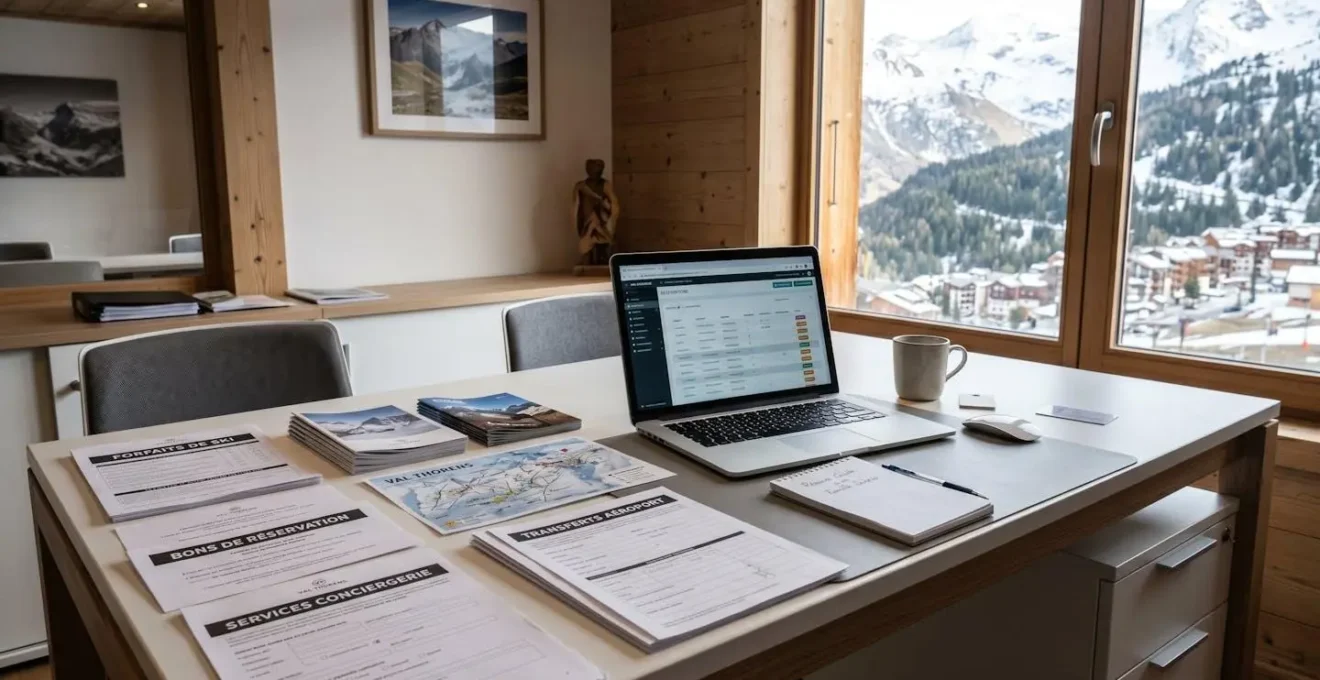
The value proposition of premium alpine rental extends well beyond accommodation access. Agencies specializing in Courchevel and the 3 Valleys coordinate ski pass booking, equipment hire, airport and train station transfers, and lesson arrangements as standard practice—integrated logistics that would otherwise consume hours of a property owner’s preparation time across multiple vendors and languages. Rather than juggling separate bookings for lift tickets, ski school slots, and Geneva transfer schedules, rental guests receive coordinated packages where a single point of contact manages the entire service chain.
This operational efficiency becomes particularly valuable when rental agencies managing properties throughout Courchevel 1850, 1650, 1550, and Le Praz maintain availability seven days per week to resolve questions and coordinate services. To explore how comprehensive service packages eliminate organizational friction, follow this link to see agencies providing transparent weekly rates—typically ranging from approximately €2,400 to €8,100 depending on property size, altitude, and peak season timing as of winter 2024–2025. The price structure reflects not merely accommodation square meterage, but the complete service ecosystem eliminating organizational friction.
Experienced alpine travelers consistently report that the time saved through professional coordination—pre-arranged transfers meeting flights, ski passes delivered to the property, equipment sized and reserved in advance—justifies premium agency fees by preserving actual holiday time for skiing rather than logistics. Property owners, conversely, either replicate this coordination work themselves or pay separately for fragmented services lacking the negotiated rates and established vendor relationships that specialized agencies leverage across their property portfolios.
Seasonal flexibility that ownership simply cannot match
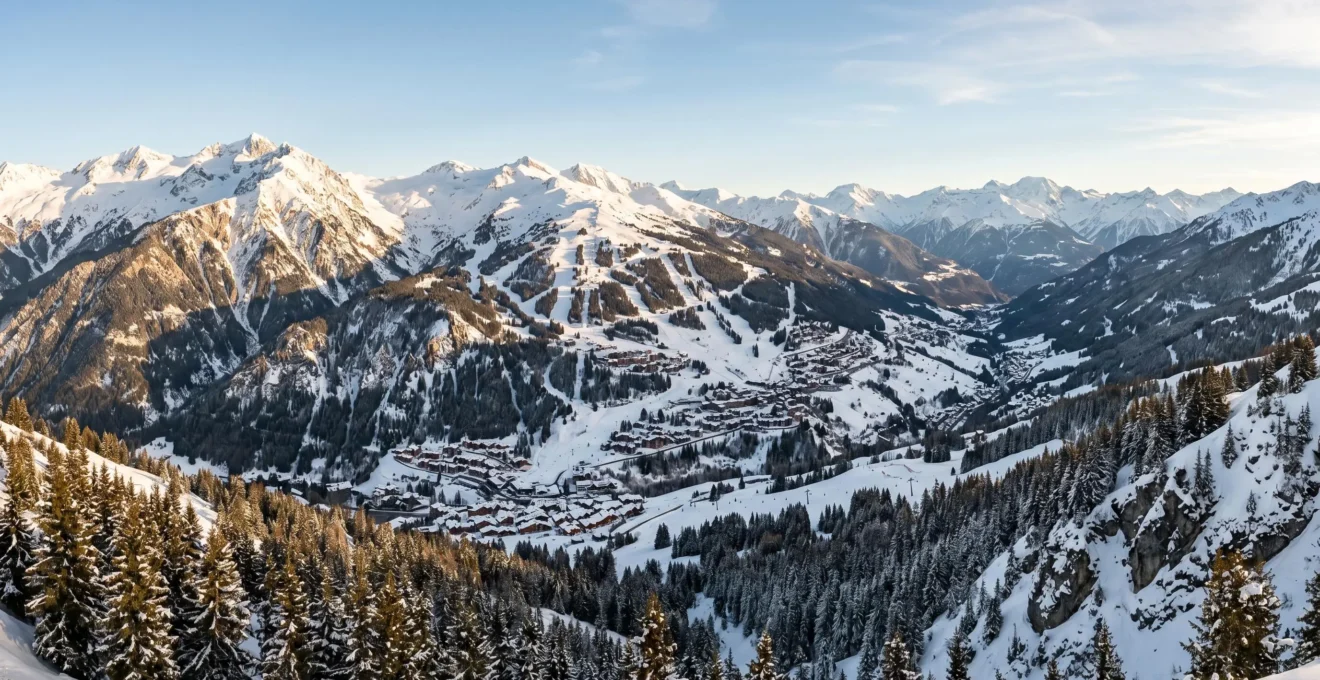
Ownership locks you into a single property regardless of how your preferences, family composition, or seasonal priorities evolve. A couple purchasing a compact apartment suitable for two finds themselves constrained when children arrive and space requirements triple. Conversely, rental enables rotating access across property types and altitudes season after season—a smaller apartment during a quick solo ski trip, a spacious chalet when hosting extended family, a lower-altitude base for summer hiking, a slope-side location during peak ski weeks.
- If you realistically use alpine properties fewer than four weeks annually:
Rental proves strongly favored. Ownership costs—including utilities maintained during 48 weeks of vacancy, property management fees, and capital opportunity cost—vastly exceed transparent weekly rental expense. Avoid locking substantial capital in an underutilized asset.
- If your usage ranges between four and eight weeks annually:
Rental typically remains optimal unless specific ownership motivations apply. Break-even analysis favors rental until usage exceeds eight weeks yearly. Consider family-stage flexibility needs (young children growing into different space requirements) and whether capital diversification outweighs property attachment.
- If you anticipate eight or more weeks annually, or eventual permanent relocation:
Ownership economics may justify consideration at heavy-usage thresholds. Evaluate long-term residency intentions and potential rental income offsets during absence periods. Even at this usage level, rental preserves geographic flexibility impossible with single-property commitment.
This seasonal flexibility proves particularly valuable across Courchevel’s distinct altitude zones and the broader 3 Valleys network. Industry data suggests that the official Les 3 Vallées destination authority confirms that 161 ski lifts serve runs spanning 1,100 metres to 3,230 metres altitude, with 85% of the ski area positioned above 1,800 metres guaranteeing consistent snow cover. Rental access allows you to sample varied microclimates, village atmospheres, and proximity-to-slopes trade-offs across this vast interconnected terrain—experimentation impossible when anchored to a single owned address.
Practical booking timelines favor planning two to four months ahead for securing prime properties during peak Christmas and February half-term periods, though shoulder-season availability often permits shorter lead times. This advance reservation window remains trivial compared to the multi-year capital commitment and disposition complexity facing property owners seeking to change their alpine access strategy.
Your mountain retreat questions answered
How far ahead must I book for peak ski season availability?
Prime properties during Christmas, New Year, and February half-term typically require booking two to four months in advance for optimal selection across altitude zones and property configurations. Shoulder-season periods (early December, March) often permit shorter booking windows of four to eight weeks. Early reservation provides choice rather than necessity—unlike ownership, where your single property remains fixed regardless of when you decide to travel.
Are service packages genuinely all-inclusive or do hidden costs emerge?
Reputable agencies distinguish clearly between included services (property accommodation, basic coordination) and optional add-ons (premium catering, private instruction, specialized equipment). Transparent operators itemize ski pass costs, transfer fees, and equipment hire separately rather than bundling opaque pricing. This clarity surpasses ownership’s unpredictable maintenance and emergency repair expenses that surface without warning throughout the year.
What happens if I need to cancel my booking?
Standard cancellation policies typically involve deposit forfeiture on timelines ranging from 30 to 90 days before arrival, with full payment due closer to the booking date. Travel insurance providing cancellation coverage for medical emergencies or unforeseen circumstances offers protection. Contrast this finite, predictable risk with ownership’s perpetual financial obligation regardless of whether personal circumstances prevent you from traveling in a given season.
Can I genuinely access prime Courchevel 1850 properties through rental?
Rental provides access to the complete property spectrum across all Courchevel altitude zones, including slope-side locations in the prestigious 1850 district. Agencies managing diverse portfolios offer properties ranging from compact apartments to expansive chalets with precise specifications regarding proximity to lifts, village amenities, and views. Ownership, conversely, locks you into a single location and configuration regardless of your capital investment level or how preferences evolve over subsequent seasons.
The mathematics and practical realities converge on a consistent conclusion: for travelers prioritizing flexibility, service integration, and capital efficiency, alpine rental outperforms ownership across nearly every dimension that matters. Rather than anchoring substantial wealth in a property used weeks rather than months annually, rental redirects resources toward the actual mountain experiences that justify alpine access in the first place—precisely the outcome that transforms winter holiday planning from burden into anticipation.